Showing posts with label Yellow-rumped Warbler. Show all posts

Sunday, July 10, 2016

Upper Tygh Creek and young birds

I took a look at weather radar at 5 am today and decided I would be dry if I went on a bird hike in the Badger Creek Wilderness.  I have birded the lower section of Tygh Creek up into the wilderness, I wanted to avoid a repeat of the brutal hike up the steep trail. so I drove up FR 2720 to the Jordan Cutoff Trail which gives you access to the upper sections of Tygh Creek and avoids the steep climb.  While this upper  trail goes up and down in spots, it is really rather flat and is an easy bird hike.  It is the purple section on my often posted map of the area (see below) the access trail is in red and starts at the red star.  My map is getting rather cluttered, you might need to zoom in to see the trails.


Early July is a great time to bird in these areas, the woods are full of birds. With all the recently fledged birds, I would say it is the busiest time of the year.

This clearing was right before you cross Tygh Creek on the trail.  I estimated over 50 birds were in the surrounding trees. It was birding madness trying to track them all.  Dark-eyed Juncos, Pine Siskins, Red-breasted Nuthatch,  Cassin's FInch. MacGillivray's Warbler and Yellow-rumped Warbler were the main varieties.


There was a young MacGillivray's hanging out in the brush. I could not get a photo, so I settled on what I thought was mom, no black lores.


Young Dark-eyed Juncos were the most common hatch-year (HY) birds I saw.


All along the trail adult juncos let me know I was an intruder. Lots of noisy complaints were filed.


Hatch-year Chipping Sparrow.


Thankfully there are volunteers that go out into these wilderness areas and clear the trails.


A good portion of the trail passes through old blow-down.  With all the flowers out, it is really very beautiful. I saw 9 Rufous Hummingbirds, most were in habitat like this.


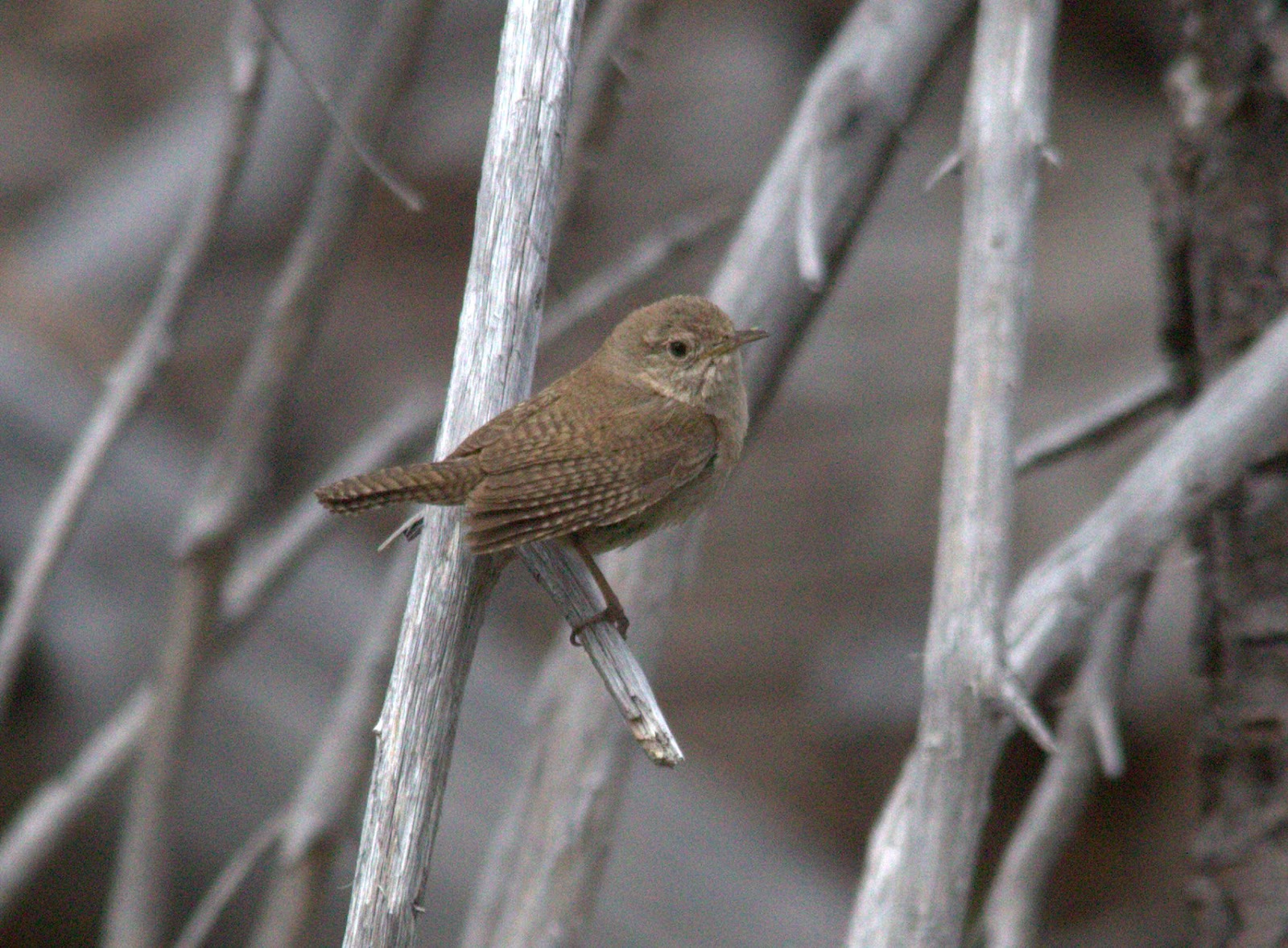
A family of House Wrens were making a huge racket in this clearing.   Juveniles are supposed to not have strong barring on flanks, I figured this one was the best bet for a juvenile.


Another MacGillivray's was a nice treat.


Lots of young Yellow-rumps were in the trees, note heavily streaked below.


This one was also heavily streaked below, but had a yellow throat, so I went with hatch-year male.


Juvenile Western Tanagers have streaks to the underparts, so I do not think this is a hatch-year bird. I did see a few juveniles.  But they were very secretive.
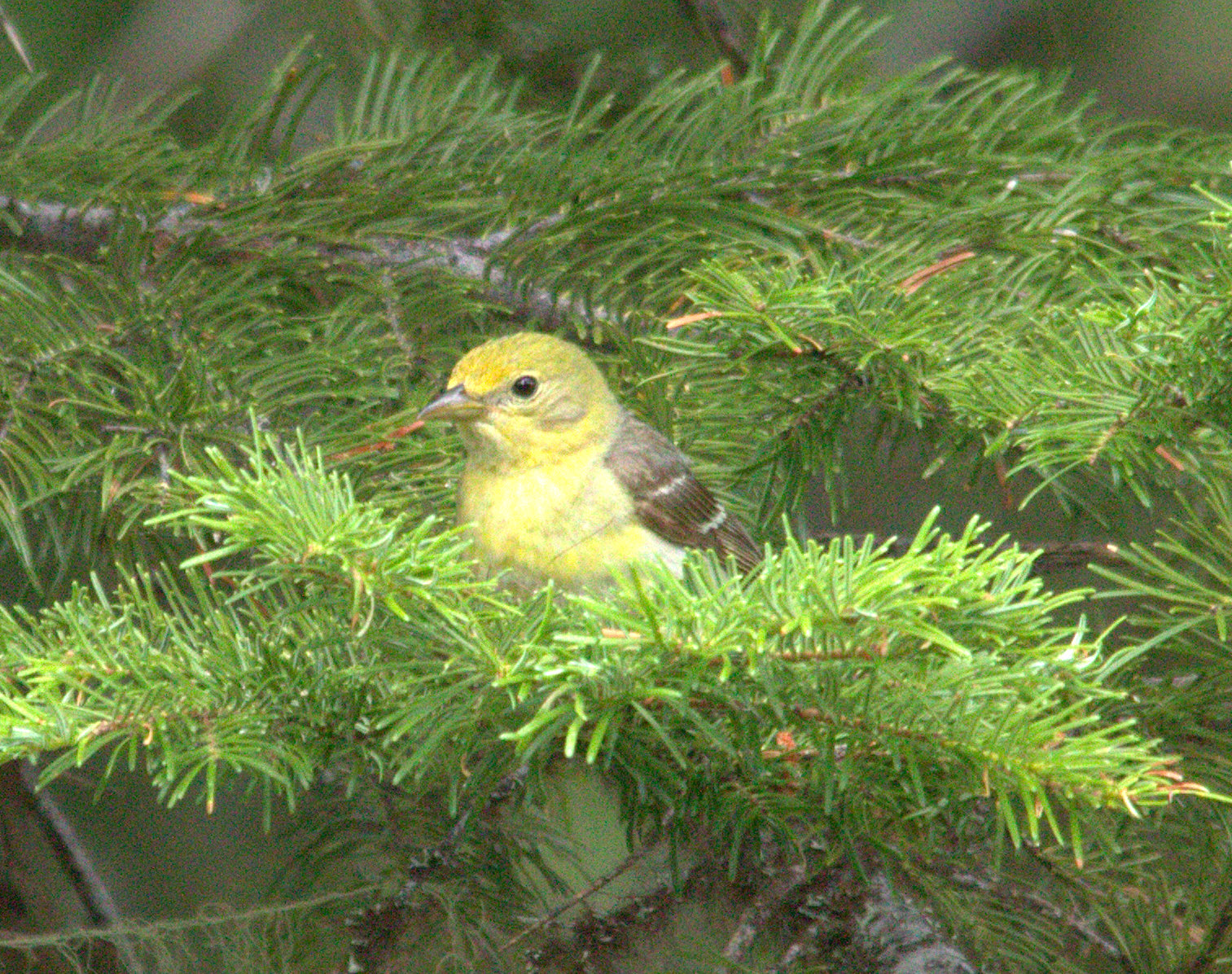


Not a hatch-year tanager. Hatch-year birds have no red. A classic image from the western mountains.


Down at the crossing of Tygh Creek a juvenile Pacific Wren was in the dark brush.


Juvenile Townsend's Solitaires should still have scaly underparts, so this is not a hatch-year bird.
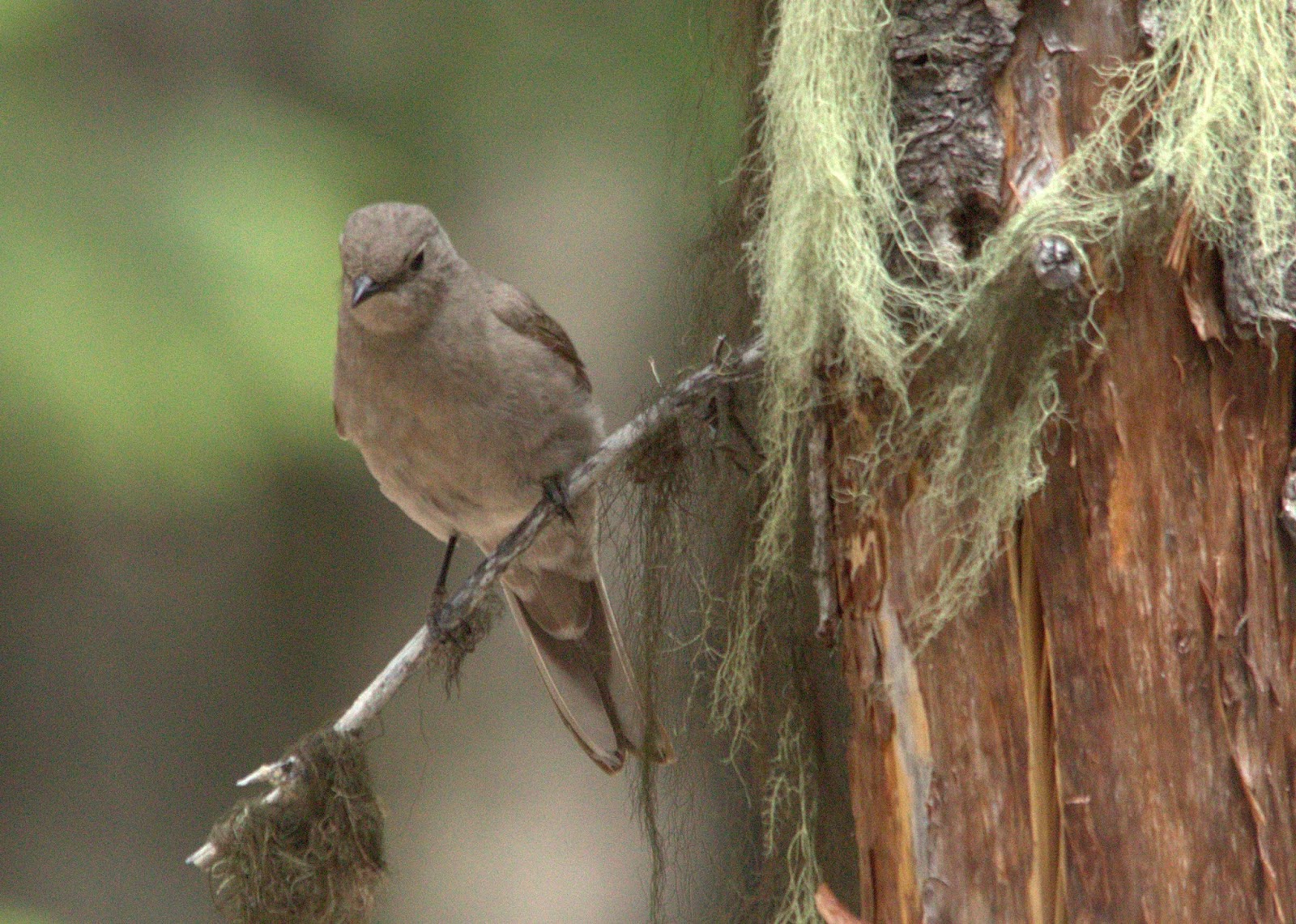


Groups of Evening Grosbeak were up in the dark tree tops.  I could not tell if this was a juvenile or not.  It seemed to be following an adult around.


Lots of birding activity, it took me almost seven hours to bird seven miles. I would urge folks to try this very nice birding area, or just get out in your local woods and enjoy all the youngsters!

Turkey Vulture  5
Rufous Hummingbird  9
Williamson's Sapsucker  1
Western Wood-Pewee  5
Hammond's Flycatcher  3
Dusky Flycatcher  7
Cassin's Vireo  1
Warbling Vireo  2
Mountain Chickadee  2
Chestnut-backed Chickadee  9
Red-breasted Nuthatch  13
Brown Creeper  9
House Wren  11
Pacific Wren  2
Golden-crowned Kinglet  17
Townsend's Solitaire  1
Hermit Thrush  7
MacGillivray's Warbler  5
Yellow-rumped Warbler  23
Hermit Warbler  2
Chipping Sparrow  26
Dark-eyed Junco  43
Western Tanager  15
Cassin's Finch  13
Red Crossbill  3
Pine Siskin  32
Evening Grosbeak  9

After a long, exciting hike, Huck was eager to get in the car and rest. Once he senses he is getting near the car, he races ahead and waits.


Thanks for the visit.

Thursday, December 31, 2015

Reedsport CBC

The first Reedsport Christmas Bird Count occurred on Wednesday the 30th.  I have never birded that far south on the coast, so I thought I would volunteer to wander the North Spit of the Umpqua River. This area is part of the Oregon Dunes National Recreation Area.

My area was to cover the interior of the spit, not the beach.  I knew it might be limited as to birds and wet with all the rain that has hit Oregon. And I could have predicted the bird list,  but you never know what is there until you look.

A map of my area:


Information on the geology of the dunes:

Dune Geology

As you can see I was able to access only a small portion of the area I was assigned.  I would like to have had the time to bird behind the beach dunes, or at least time to see if there was a trail there.

A view looking south into the deflation plain.


Meadowlarks, juncos, and White-crowned Sparrows were birds seen in these areas.  Flyover Ravens, crows and a few eagles also said hello.


I had the brilliant idea to attempt to cross this nice sand flat and bird the woods nearer the beach.  My dog, Huck, was walking out in front of me.  The sand under him turned to jello, he turned, looked at me and decided this was not a good idea. He dashed back to solid ground.  I took one more step and went down to my shins.  The sand was far to soft to risk a crossing, I was lucky to get back to solid ground with both my boots still on my feet.  Of course being me I still tried a few other spots, there was no solid trail to be found.


To give me time to bird the entire area , I got a lift to the center of the spit in a jeep.  The driver decided to do some exploring after I was dropped off.  He was the first to discover soft sand.  I caught up to him and found this sight.  We tried to dig it out, no success. He said he would be okay and sent me on my way.  I birded on.  Six hours later Russ came in with his rig and yanked him out.


Western Meadowlark was my first bird on the checklist.


These are the areas on spits I love to find.  A nice bog.  These areas are a magnate for the birds.  

Fox Sparrows, Yellow-rumped Warbler, Varied Thrush, Northern Flickers, Dark-eyed Juncos, White-crowned Sparrows, Black-capped Chickadees, Song Sparrows and Spotted Towhees were all using this one little bog.  I stay at these sites for as long as I can in the hopes a rarity pops up. 

I was walking through brush south of this bog when I flushed a bird into a big Christmas tree sized Douglas-fir.  The bird landed in the center of the tree. I could not see the bird well, it was hard to identify. It finally dawned on me I was looking at a Virginia Rail sitting in a fir tree.  Wish I was able to get a photo of that..


The dominate bird of the area:

Yellow-rumped Warbler


A first-year Bald Eagle.


Not a Swainson's Thrush ....


but a Hermit Thrush.


Birds seen and a rough guess on my numbers, I left my data sheet with the compiler..


Mallard  5
Surf Scoter  2
Bufflehead  9
Common Goldeneye  2
Common Merganser  2
Double-crested Cormorant  3
Great Blue Heron  3
Northern Harrier  2
Bald Eagle  3
Red-tailed Hawk  2
Virginia Rail  1
Spotted Sandpiper  1
Western Gull  2
Western x Glaucous-winged Gull (hybrid)  3
gull sp.  4
Downy Woodpecker  2
Northern Flicker  6
American Crow  4
Common Raven  8
Black-capped Chickadee  12
Chestnut-backed Chickadee  6
Pacific Wren  2
Marsh Wren  7
Blue-gray Gnatcatcher (caerulea)  1     seen on edge of river in brush.  Hanging with Yellow-rumps.  Blue back. white outer tail
Golden-crowned Kinglet  10
Ruby-crowned Kinglet  7
Wrentit  3
Hermit Thrush  1
American Robin  2
Varied Thrush  5
Yellow-rumped Warbler  90
Fox Sparrow  6
Dark-eyed Junco  60
White-crowned Sparrow  12
Golden-crowned Sparrow  15
Song Sparrow  10
Spotted Towhee  10
Western Meadowlark  8
Red Crossbill  12


Thanks to all the organizers, I had a blast and will be back next year. Since it was the area's first CBC, the organizers asked for tips to help with count next time.  

The bird area marked on map might be accessed from the north jetty on a falling tide.  Go in and get out before tide cuts you off.  

How to bird the area between the plain and the beach dunes?  It probably depends on water level, this year was an exceptionally wet December.  Maybe the area is an easy access with out the soft sand.  It is hard to guess how best to bird that area without more exploration.

Thanks for the visit!

Walk out onto the sand he says, looks easy he says....


Saturday, April 4, 2015

The New Fernhill

I had heard of all the changes at Fernhill Wetlands but had yet to visit the site since the trails had reopened.  I took a drive out there today after wandering around a cloudy and foggy Mt Tabor earlier in the morning.

The Fernhill site is owned by Clean Water Services.  They are trying to improve the water treatment site.  The idea is to use a natural process to clean and cool waste water before it enters the Tualatin River.   It is called a Natural Treatment System (NTS).  Their site is here. 

For directions on how to get to Fernhill, check out the Oregon Birding Trails Tualatin Loop.

Below is a view south from the parking lot which is located at the northern end of the complex. The phone poles along the right side are on Fern Hill Road.


Next is shot from same spot looking to the east.


This little Killdeer was not pleased with me passing by its nesting area along the trail.  With the stronger black in the face and the bright red orbital ring, I think this is a male. Females would have less contrasting black and more of an orange-red orbital ring


I went counter-clockwise around the site, so down Fern Hill Road first. This picture is of the next pond down the path. I am standing in the small observation deck.  All the ponds are set up in a similar fashion.  They did leave one flooded, the one over in the NE corner.  They will use that water to flood these other ponds every few weeks or so and then let them dry out. This is to get the vegetation off to a good start.


I was happy to see so many American Pipits in the muddy areas. I scanned all that I could, no oddballs.


A beautiful light gray Peregrine Falcon zoomed over the flats, it scared all the pipits up into the air.  A flock of Least Sandpipers took flight and then dove for cover in the mud.  Least Sandpipers can vanish in a mud flat if they want to.  How many can you find?


7
I have now crossed the area on the lower dike.  I am now looking north toward the parking lot. In front of me is the lake they will use to flood the other areas.


These Cacklers were a enjoying a lunch of grass along the lake, until I tried to slip by on the trail.


A  Song Sparrow is nice bird to enjoy when it is sitting out in the sun.


Which three North American warblers sport a bright yellow rump?


Yellow-rumped, Magnolia and Cape May


Dabbler Marsh is much the same as always, as is the area on the east side of the site.  I did hear an Indigo Bunting singing down the trail. I took off on a run to get a picture.  I stopped after a few steps, I realized I had just been fooled by a Lesser Goldfinch.


Which bird is this?  Long thin wings, held in a M shape.


Osprey.

A view looking south with the sun out.


Up behind the restrooms you have access to two small ponds.  They are fenced off but it looks like a trail goes down the south side.  Below is a shot looking east at the two ponds.


There were 27 Greater Yellowlegs and two Green-winged Teal on the ponds.


Greater Yellowlegs look larger headed than Lesser, they have more barring on the flanks in alternate plumage and their bills are thicker looking. And at the right angle they look knobby kneed.


Birds seen inside the NTS boundary (the new mudflats):

Snow Goose  1
Cackling Goose  1000
Canada Goose  15
Gadwall  6
American Wigeon  4
Mallard  11
Green-winged Teal  21
Bufflehead  3
Great Blue Heron  2
Turkey Vulture  1
Osprey  1
Killdeer  6
Least Sandpiper  20
Belted Kingfisher  2
Peregrine Falcon  1
Tree Swallow  75
Violet-green Swallow  15
Barn Swallow  5
Cliff Swallow  3
American Pipit  40
Song Sparrow  3
Red-winged Blackbird  4
Brewer's Blackbird  6
House Finch  4

Birds seen outside the NTS (everything else that was not changed up to middle of dikes):

Cackling Goose  1100
Canada Goose  25
Gadwall  8
American Wigeon  4
Mallard  7
Cinnamon Teal  4
Northern Shoveler  8
Northern Pintail  6
Green-winged Teal  25
Canvasback  5
Bufflehead  3
Common Merganser  3
Ruddy Duck  1
Pied-billed Grebe  1
Great Blue Heron  2
Great Egret  1
Turkey Vulture  1
American Coot  25
Killdeer  2
Greater Yellowlegs  27
Mourning Dove  2
Anna's Hummingbird  3
Downy Woodpecker  1
Northern Flicker  2
Western Scrub-Jay  3
American Crow  1
Tree Swallow  20
Violet-green Swallow  5
Black-capped Chickadee  4
Bewick's Wren  2
Ruby-crowned Kinglet  1
American Robin  6
European Starling  11
Orange-crowned Warbler  2
Common Yellowthroat  1
Yellow-rumped Warbler  9
Fox Sparrow  2
Song Sparrow  14
Golden-crowned Sparrow  6
Dark-eyed Junco  2
Red-winged Blackbird  7
Brewer's Blackbird  1
Brown-headed Cowbird  2
House Finch  7

I am looking forward to see how this area develops.  Thanks for visiting.


Yellow-rumped, Magnolia, Cape May